
Why the Hardest Paths Change You the Most

From Machu Picchu to Half Dome

I remember sitting quietly, looking at Machu Picchu after four days on the Classic Inca Trail.
My legs were tired. My shoes still dusty. And there was nowhere left to go.
I wasn’t thinking about the climb anymore. I wasn’t cataloguing what it took. I was just… sitting with it. Letting the view exist without needing to do anything with it.
There’s something that happens after sustained effort that isn’t quite relief. It’s quieter than that. Like the noise you didn’t know was there finally stops.
I’ve always found it hard to explain why certain places stay with you, while others simply become memories.

The four days leading up to that moment were slow in a way I hadn’t expected.
I remember one morning — it was still dark, the air cold enough that you could see your breath — and the group just started moving. You wake up, you lace your boots, you walk. That becomes the whole logic of the day. Since it was November, we had rain on one of the days, and the trail had that damp, earthy smell that only mountain paths seem to have. And it was quiet — the kind of quiet where all you hear is footsteps, breathing, and rain hitting ponchos.
Conversation fades after a while. Not because anything is wrong, but because the trail asks for attention. Your footing, your breathing, the person in front of you. You stop performing and just move. Our guide kept reminding us not to think too far ahead — just to keep a steady pace and let the trail unfold one section at a time.
And somewhere in that repetition — I couldn’t tell you when — something loosens. Not a moment. More like a gradual releasing of grip.
Half Dome was entirely different.
The trail builds slowly, but the last stretch doesn’t prepare you — it just arrives. Steel cables bolted into near-vertical granite. Your hands tighten without deciding to. The drop below is present in a way you can’t ignore or narrate around. Every step is deliberate.
There’s no drifting into thought up there.


Going up, I was focused enough that fear stayed in the background. Coming down was different. That first moment turning back toward the drop made the exposure feel much more real.
I remember pausing halfway up the cables — not from exhaustion, but because I needed to reset. Slow the breathing. Steady the grip. Find the next foothold.
It wasn’t about reaching the top in that moment.
It was just about continuing.
And that felt like enough.
Other places leave different kinds of marks.
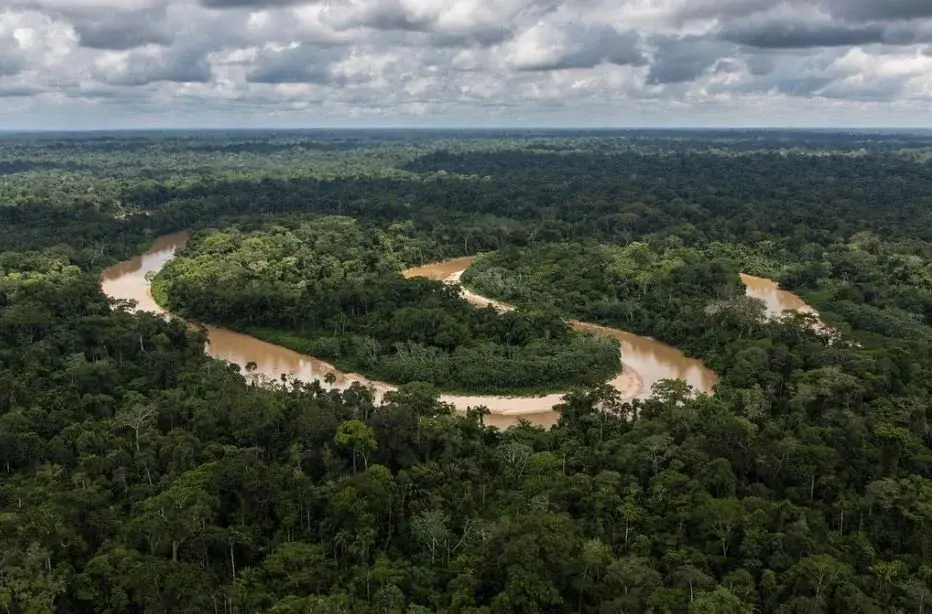
The Amazon felt overwhelming in a way that wasn’t unpleasant — just humbling. Dense, loud, and alive in every direction. The air felt heavy, the river moved quietly, and the forest seemed to have a sound even when nothing obvious was happening. Even when everything looked still, you could sense movement around you.
It is the kind of environment that quietly removes the illusion that you are in charge of much.
And then there was Mount Shasta.
I didn’t hike it. I was just there, standing near it, and something about the place made me go still. Not silence exactly. Something underneath silence. I had heard people describe Mount Shasta as having a certain energy, and I usually take those things with some caution. But standing there, I understood why people say it. There was a stillness to the place that felt different.
I couldn’t explain it then, and I still can’t now.

Looking back, none of these places feel the same in memory.
The Inca Trail is long and inward.
Half Dome is sharp and exposed.
The Amazon is sensory overload.
Shasta is stillness.
But they share this: none of them let you rush.
You can’t skip ahead on a four-day trail. You can’t fast-forward through altitude or cables or the weight of a rainforest. You have to stay in it, at the pace it gives you.
I’ve realized I’m drawn to experiences like that.
The ones where progress is quiet, sometimes uncomfortable, and mostly internal.
The ones that take time.
I don’t remember every step.
But I remember how those places felt.
And somehow, that feeling has stayed — not as a lesson exactly, but as a quieter way of moving through things.

Comments